Hillbilly
Members
-
Joined
-
Last visited
-
Thanks - Yes no point in going to the bother if the module is defunct but I'm talking about all the good quality tested modules becoming available ( maybe off a new crashed car). I suppose I'm wondering whether there is an option of having a spare different battery that could be made to work that might extend the life of the original. If for instance you take this ebike could you remove its original battery when it's flat and devise a method of putting the leaf module on the back with an adaptor/controller that mates with the existing cables and drives the motor.

-
As someone very new to electric bikes I am a bit surprised at the cost and variety of their batteries. Is there a second hand market and any flexibility in interchangeability. Also has any looked at the feasibility of using somehow the modules from scrapped electric cars as I understand these are becoming available at about £10 each. They are about 0.5kWh capacity but at similar weight and volume as my bike battery which I think is just under 0.4 kWh so a bit more efficient and maybe longer lasting. I presume a fair bit of work in creating controllers and adaptors would be needed but there could be a huge supply of these in the next few years. Their spec is shown below http://www.eco-aesc-lb.com/en/product/liion_ev/
-
It seems you both may be right ( or wrong). A Google search brought me back to this thread on this forum. ( edit although for some reason the link didn't work - basically it seems BH had regen braking in some years but not others on the same model. http://www.pedelecs.co.uk/forum/threads/storck-raddar-multitask-se-v-bh-emotion-neo-xt
-
The Japanese version of my car seems to come with inverter as standard - may look into having this fitted. Also it seems there are these +'s & -'s of regen which I need to look into https://www.electricbike.com/regenerative-brakes/
-
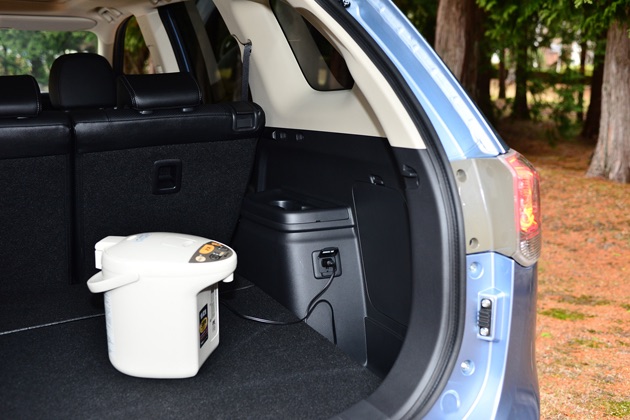
OK thanks guys - I presumed there must have been a difficulty if it hadn't become more common by now. I remember the old dynamo lights that used the wheel rotation to generate enough elect to light a tiny bulb, but I suppose the trickle charge generated isn't enough to regen the battery. I know you can get tiny inverters that plug into the cigarette lighter on your car and allow a three pin to be inserted, obviously you don't want to blow a fuse or flatten you battery but wonder whether you recharge your battery whilst car on the move. Also I have an Outlander PHEV which in Australia and Japan allows you run electrical apparatus on campsite from the car's 12kwh battery,( but not UK model). I think my ebike battery only has about 0.4 kWh capacity so think it should be possible to transfer the juice somehow. A spare battery would be possible answer if they were a bit cheaper (£190 for my model)
-
This YouTube review of electric bikes is now apparantly 3 years old now but includes reference I think to the third bike having regenerative braking. I've used the search facility on this forum without it finding any reference on this so starting this thread. I'm new to electric bikes and live in hilly area so the ability to recharge my battery on the move would be a great boon. Has there been much development on this factor can you get much range back. https://www.youtube.com › watch
-
Looks like there's a cracking sequel coming out about electric bikes & EVs ( although according to OLEV the electric bike is an EV.) http://www.autoblog.com/2016/04/11/who-killed-electric-car-another-sequel/?ncid=edlinkusauto00000015
-
I remember them well and those petrol rationing coupons we didn't need to use in the end. After their tsunami and nuclear shut down the Japanese came up with this solution although I might wait for the Dyson version. http://www.bloomberg.com/news/articles/2016-03-21/dyson-challenges-tesla-with-1-4-billion-battery-tech-investment
-
It's not science fiction let kyten's alter ego explain
-
I think you were probably a pioneer ahead of the rest of us early adopters Bob, thats possibly how you got your user name. I delayed my 3 kwP PV system until 2011 just before the FIT payment and 25 year term was due to be reduced. It cost just under £9k (about £3 per watt and I know the price for a similar system now is well under a half that. It's averaged 2500 kWh/year since so with a LEAF getting 4 miles/kWh worth a good 10,000 miles of motoring pa. I rented/trialled my first leaf in 2012 primarily to try and store the surplus solar energy and then bought one of the last Japanese Leaf imports in May 2013 when they halved in price as soon as the improved Sunderland ones were introduced. I used to pack a bike in the back of these which I used when I left them at charging points for a few hours. I used to go up to a charging point a few miles from Kielder reservoir but the uphill cycle used to knacker me and reduced the distance I could cycle round it, so looking forward to my folding elec bike getting me bit further. It's battery seems to take only about 45 watts when charging so wonder whether you charge it up via the EV's 12 volt cigarette lighter outlet.
-
Is this likely to happen again in 2016 - would be interested
-
We are probably at cross purposes here - P36 of 132 (P25) has a pie chart labelled "Where cars park at night" showing 25% parked on the street so if the 70% + figure is on private property then the majority of cars can be accessed by private or home charging ( albeit extra cabling may be necessary). The UK Govt strategy is that public charging should be provided for the rest but that by 2040 every new car will be "ULEV" ( the Dutch have even more optimistic targets) Scepticism on power capacity grounds is often raised, but this invariably ignores the fact that huge amounts of equivalent energy are used in recovering the oil, refining it and delivering it to the fuel tank. The Rapid Chargers, now located at every IKEA and motorway service station are actually supplied with renewable power and home charging at night tends to be off peak when the grid has stepped down its fossil fuel usage. In regard to battery longevity/disposal some of the first generation of LEAFs are now through the 100,000 mile mark without losing their displayed capacity. Even after they fall below 80% they have a long useful life as storage for Solar PV systems.
-
Do you have a source for this figure - this RAC data (p36) suggests it is closer to 25% http://www.racfoundation.org/assets/rac_foundation/content/downloadables/spaced_out-bates_leibling-jul12.pdf
-
Unduly pessimistic in my view. Most car journeys in UK are within 80 miles so within range of electric cars, but anyway EU legislation steadily restricting emissions is forcing every car manufacturer to introduce them and Local Authorities (now responsible for Public Health) will have to prevent toxic air pollution. Those car owners without access to home charging can get the PHEV type of electric car which provides 20-60 mile EV range so I guess your " completely impossible" is down to perceived cost of EV purchase prices which are now dropping. I was originally writing though from a cyclist's perspective - is there any need for us to accept toxic fumes as inevitable, when alternatives are now available.
-
I'm a bit surprised by some of the negative comments on here about electric cars as I would have thought their main feature of avoiding exhaust emissions would benefit all cyclists. http://www.fitday.com/fitness-articles/fitness/cardio/how-does-air-pollution-affect-cyclists.html