BG bicycle
Members
-
Joined
-
Last visited
Everything posted by BG bicycle
-
Got that one a while ago. Apparently it’s a SW800. As to whether it is actually a SW900? All the features are similar but different codes and key strokes. Thanks Vfr400. I’ve now sourced part of the data in German, at this moment in time.
-
Anyone with a specific manual this Fischer ebike display. As ever it’s full of China quirks and the manuals I have don’t reference its nuances.

-
Something overlooked is your BMS, ability to handle that higher charge current. Any out of balance cells will quickly become more of a problem. Highest cells will rise faster and with the BMS, inability to drain them down quick enough the cells may overcharge and then the overall voltage taken into account the BMS, then stop the charge. BMS, could also overheat. Some cells will read 4.25v possible higher and other cells could be far from 4.2v. Result is a far shorter ride. The problem becomes worse and worse, lowest cells become lower voltage and therefore less and less distance. Also, the higher charge current on a well balanced battery pack is only applicable to about 70-80% of the maximum battery capacity. That is to say that final 1-2 volts can take another 2 or more hours. Far longer if require the battery to balance. In short, should only utilise a high current charger if your balancing circuitry can handle the extra current. And idea should deploy voltage monitoring on all cells within a pack. And install a smart BMS, then custom the balancing voltage, view cell data, bluetooth, etc. And yes, lower currents, are better. I charge via 2 and 8.14amp charger 10s 13p. I’ve an external active balancer capable of 3+amps per cell. I find a 2amp charge far superior. However, some of my journeys are 100-200km with multiple charges and 8.14amp to maximum 4.05v per individual cell is essential. My goal is to build a 400 cell battery within a Vector Typhoon frame. Over 4kwh. Should negate those present cafe stops.
-
https://www.insatinternational.com/contact_us.php
-
Depends on your controller. Ebike alarms are available.
-
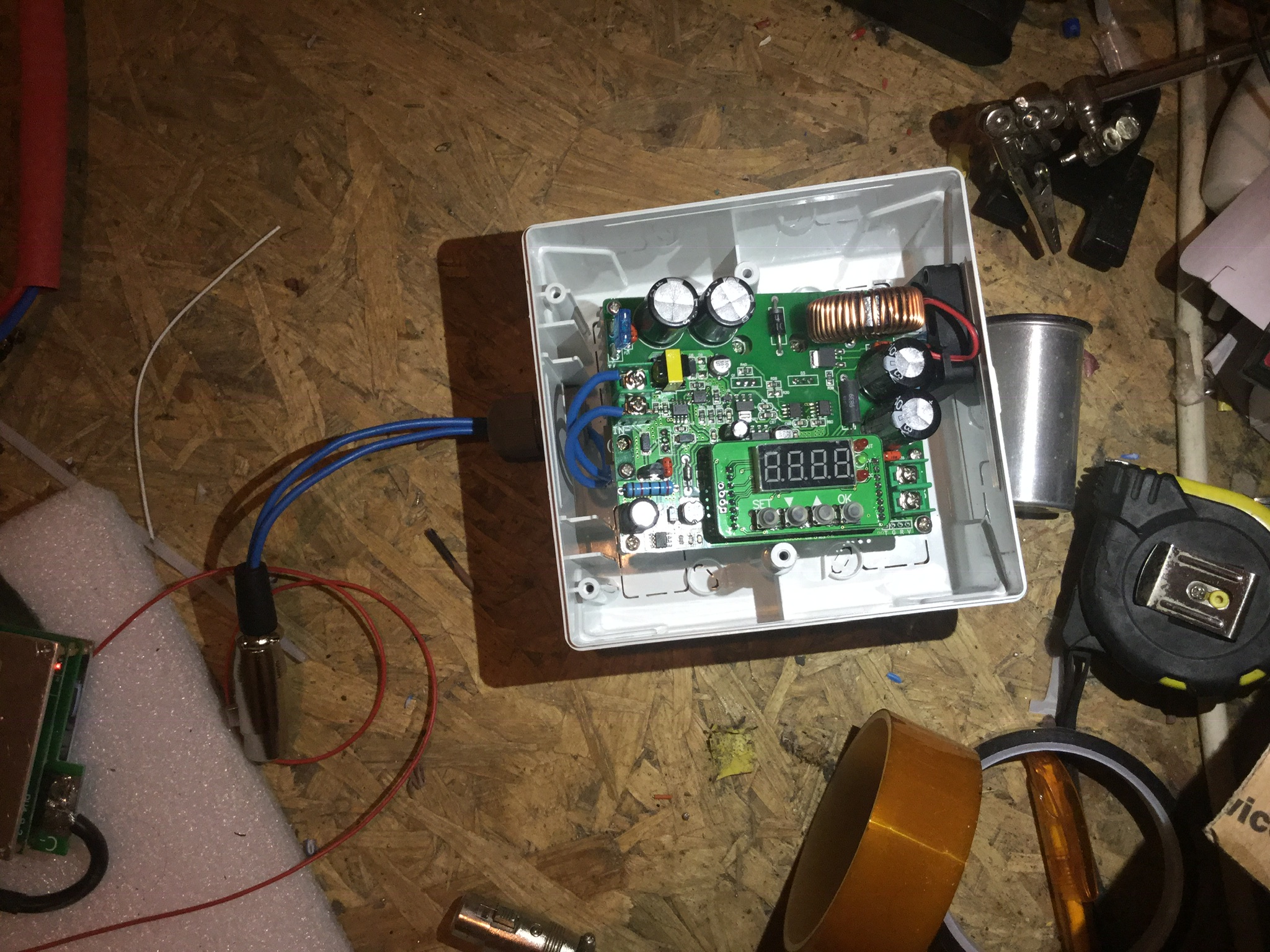
I believe one of these digital buck cc, cv, power regulators could bring a battery up to voltage. However, without specific monitoring of each parellel cell group not something I would try.

-
Buy a water repellent contact spray. I soak everything in the stuff. No idea what brand in the UK. Within BG. Tin on the right is insulation varnish, spray that on the motor windings.

-
These are Batteryblocs. Temporary pack, was to test some cells that were proven fakes. Long story that when the credit card company sorts out eventual divulge. Slam dunked Allybaba trade assurance with Samsung’s assistance and they still sided with the seller. Advantage of this system is no welding, nor solder. And your cells are easy to replace or sell when cycle life drops.

-
NB.these opinions aren’t based on longevity nor price. Battery selection is mostly at the top end of the market a flip of a coin. One factor is certain the bigger the Ah, the higher the voltage, the less demand for those higher amps per individual cell, the lower the voltage draw demanded the better for those cells longevity. Take note that LG MJ1 are specific about a rest period between discharge and charge. The higher Ah capacity for a 35E, can out perform long term the higher Ah capacity from a 30Q, dependence upon ampere draw when riding. GA, once beyond their service use (various ways to get there fast) are nortious heaters. But, again depends on the demands made while in service. Stipulate your demands, and search out cells within your designated parameters. I.E. If you don’t want to wait 15 minutes between discharge and charge then one particular brand of cell isn’t for you.
-
-
Samsung 35E top amperes 8A continuous. I’ve recent bought a couple hundred 35Es, although yet to fully evaluate them. A good reliable source.
-
-
Very nice conversion. Torque arms are mandatory if are going to go any speed and those potholes. My 20” folder is currently off the road the seat stem collar split and I discovered the frame be magnesium alloy. 6000km+ since June 2018, a crack was expected although surprised happened around the seat stem.

-
-
I had a similar issue a crank on my DD, started to creak. The original bicycle components was already ten plus years and in a few months covered more than 2500km. The final result was that the crank of was aluminium had wore, or stretched around the axle and the stress added by each turn to the point that it slipped constantly and I couldn’t pedal. Were a 100km+ away from home that day within a mountain range. Thankful total failure happened just after the 23km climb to a peak within Stara Planina.
-
That cable isn’t to utilise lights? As all the cables are with identification was this conclusion based from a manufacturer’s guidance?
-
Come on be serious, what is the balance capacity of that small box? Charge capacity is only its ability to pass current rather than balance. I had a waterproof BMS, that could it claimed handle 60amps. Again on,y it’s ability to pass current rather than balancing current of only burns power rather than shifts power from the highest to lowest cell. Lots of failure points also on that BMS, too many hazards attached although I’m sure fine for a small 10Ah battery. Read of far too many stories where the BMS, responsible destruction of entire pack. Will keep to the better option as described.
-
Is it really a fast charge? From reading appear to define time rather than capacity in Ah and volts and the actual charge current, as its all combined that defines fast and the degradation issues associated. To limit, or prevent fast degradation one has reduced voltage capacity proven to reduce degradation, extend battery life. Another factor is each cell holds a total capacity of amp hours to be 41.6Ah, ten cells equals 36volt nominal, this equates to a distributed charge per cell of less 1Ah. Where be the stress upon a LG MH1 group cell in that current? Isn’t any, mere fig of imagination that a large cell with quality cells ever become stressed. The equaliser could add voltage and current to a low voltage cell. Maximum 3amp, this remains well within the cell group charge rating. The controller LVC, isn’t their to be utilised, the cell loggers with audible alarm would sound at 3.5volts. I explained: I’ve never ran the battery that low. Flaws? All BMS, systems have risks, hazards. When at a certain battery Ah, this is a superior way. Then 90% are riding on low capacity batteries and very obvious a cheaper route, and a shorter one. Cost shouldn’t overide pleasure. Perhaps you agree?
-
At the moment I ride with a smart BMS, connected during discharge this allows monitoring of the cell voltages in real time. Since it’s useless during the charge cycle as it cannot balance the battery unless want to wait several days. Again, this be just another reason to remove BMS, once cell loggers are attached. The Low Voltage Cut-off: I intend to utilise the controller, shuts down at 3.1 volts. Long term the smart BMS, become redundant with LVC alarm cell loggers to warn when within a set voltage limit. At 70kms the battery can remain above 36volt, lowest level seen were just below 36v on a 50km ride mostly up hill. Digress, on that occasion I stopped at a Shell petrol station and accessed an exterior socket (with permission). Why duplicate via a standard BMS, given the risks associated with those to a battery. Less components, less risk, etc. Shortening the life of the cells. The starting voltage is 8.10Ah and this decreases as the battery holds more charge. I don’t figure how the cells degrade faster it’s a 41.6Ah battery with 8Ah isn’t that big a current comparison that size of battery. Also I never charge to 42 volts, always 80% of voltage capacity. I find the system at present far superior. The future version with less components, present time produces a better charge, more even charge and the equaliser is available to expand (even use 5s) and swap between bikes. Why have a BMS, system that’s fixed to one bike and one that cannot handle a large battery. There arises at certain Ah, these standard BMS systems are a waste of funds and serious risk damaging a battery.
-
I ride on a 4t direct drive hub, the hub is capable of 48volt, 52v without concern, without specific knowledge of a motor... However, Samsung cells are good quality and again depends on specifics, performance, etc.
-
Hello Andy1865. All the best on your build. Good quality cells make the difference the bigger motor and battery make a huge difference when upon an incline.
-
Genuine 500 watt motor? Or one disguised as 500w, but is actually a 1000w motor. What ampere is your battery? I run 10s 13p on a 1000w motor guised as a 500w. Slow on hills 28kmh. If that helps.
-
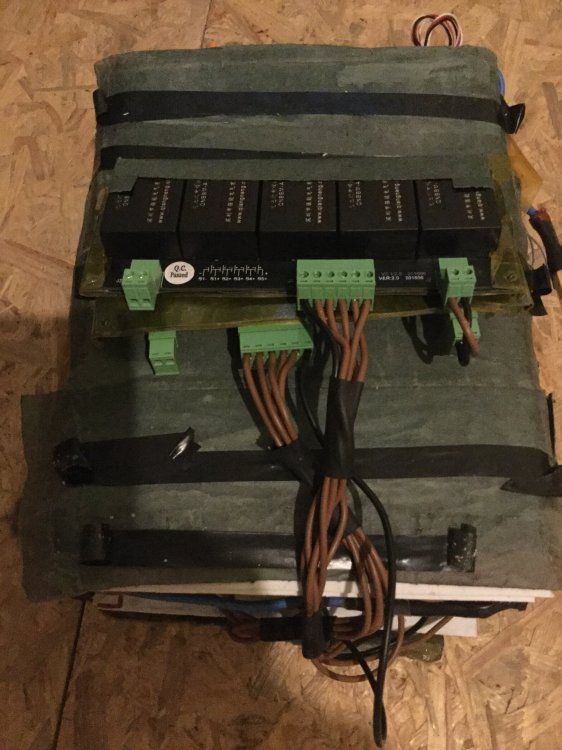
A while ago I built 10s 13p pack using LG MH1 cells. The battery was built in several stages from 8p upwards. The BMS, an all in one type couldn’t balance such a huge battery and my want to fast charge eventual the pack went out of balance. Then upgraded the BMS, fitting a smart BMS allows’ monitoring of all the cells. That couldn’t resolve the issue either. No surprise the charge were frequent at 7.5 amps. Present use a battery equaliser that moves the voltage between cells up to 3 amp. It’s an effective balancer that is completely regulated at the charger and from a chargers’ voltage. I now charge at 8.10 amps and the pack balances perfect and in super fast real time. As quick voltage rises the equaliser pulls down and brings up those lower cells. Soon I’ll no longer ride with a standard BMS. These are unnecessary and eventual I’ll only ride with cell loggers and a circuit breaker plugging the equaliser in during a charging session. Anyone else using this system?
-
I’ve ordered from EM3EV, once and if I hadn’t seen a lot of posts and Youtube, info there website with no trading address etc, doesn’t inspire competence. A physical address maybe create more sales. Appreciate any company in China, that are buying from does the address really matter? Been trading for years and do apparently manufacture rather decent batteries, etc.
-
Lovely build sure are seen on those dark roads. That controller appears chunky and robust how is it s performance on the bike?