


Leaderboard
-
lenny
Members60Points5,953Posts -
Tony1951
Members30Points1,470Posts -
Pedelecs Admin
Administrators21Points46Posts -
D8veh
Members20Points101Posts


Popular Content
Showing content with the highest reputation since 24/03/26 in all areas
-
3 pointsI built this one from a Whyte road bike that I paid about £150 for in 2017 with a 1.5kg Xiongda motor and I built my own 1kg battery. I later changed it to a rear Xiongda cassette motor with a standard 1.2kg bottle battery from Aliexpress. The whole kit was less than £250: Uploading Attachment...
 3 points
 -
3 pointsI've added a 'What's New?' link on the bar along the top. You can further customise this using the 'Show Filters' button.3 points
-
3 pointsI had the exact same experience - currently not enjoying the new forum layout one little bit. I found the previous inteface very easy to use and look at. I appreciate that sometimes change is necessary but from the user perspective, this new layout leaves me absolutely cold. However, dear administrators, I really do appreciate your efforts. Cheers, Bikes4two3 points
-
3 points
-
Have We Overestimated the Probability of Alien Life in the Universe? Once I grasped the sheer number of stars and galaxies in the universe, it seemed almost inevitable that life must be common. It was easy to imagine that the “little green men” of science fiction—or perhaps something larger and more menacing—might inhabit planets orbiting countless stars. Looking up at the night sky felt like looking at a vast collection of potential civilisations we might one day communicate with. It’s an appealing idea. But is it realistic? How likely is it that alien life exists on planets orbiting the stars we can see with the naked eye? My partner, an optimistic soul, dismisses my doubts. To her, it’s simply a numbers game. The Milky Way alone contains roughly 400 billion stars, so it seems unlikely that our Sun and its planets are anything special. I understand that argument. Statistically, it feels improbable that we are unique. But that intuition may be misleading. If very specific conditions are required for life to begin, for it to persist, and for it to evolve into complex, intelligent forms capable of building technological civilisations, then rarity—not abundance—may be the more realistic conclusion. It is extraordinarily difficult for simple life to evolve into complex organisms such as animals. It is even rarer for those organisms to develop behaviours that extend beyond survival—beyond eating and reproducing—towards intelligence, culture, and technology. And it is harder still for a species like Homo sapiens to progress from hunter-gatherers to builders of machines capable of exploring or communicating across the stars. Our own history makes this clear: it took nearly 300,000 years for our species to reach that point. Why emphasise how difficult these steps are? Because Earth’s history demonstrates just how long and improbable they appear to be. The Earth formed around 4.5 billion years ago as a molten, hostile world, battered by collisions during the chaotic early solar system. A massive impact—likely with a Mars-sized body—created the Moon and left the young Earth a seething, molten sphere. It took millions of years to cool. Nearly a billion years later, life emerged. Not animals, but simple single-celled organisms—algae, slime-like colonies, and microscopic cells drifting in the oceans. For roughly two to two-and-a-half billion years, life on Earth remained single-celled. Then, in what appears to have been a singular event, complexity arose. One cell engulfed another and, instead of digesting it, formed a symbiotic relationship. This partnership—an evolutionary breakthrough—gave rise to more complex cells. It happened, as far as we can tell, only once. From that point, evolution continued its slow work. Yet it was not until about 500 million years ago—four billion years after Earth formed—that plants first colonised land. Animals followed tens of millions of years later. And humans? We arrived astonishingly late: roughly 4.4 billion years after the planet formed. We are newcomers on an ancient world. Even then, technological civilisation is a very recent development. The first crude steam engine appeared in 1712, improved later by James Watt. Radio communication dates back only about 130 years, to experiments by Guglielmo Marconi—a blink of an eye compared to Earth’s 4.5-billion-year history. All this suggests that the path from chemistry to intelligent, technological life is not straightforward. It is long, fragile, and contingent on many unlikely steps. Even on Earth, only one species out of millions has developed advanced technology. And Earth itself may be unusually well-suited for life. It orbits a stable, long-lived star. Of the eight planets in our solar system, only one supports life today. The others are either scorched or frozen, barren worlds. Habitability requires more than just a comfortable “Goldilocks” temperature. A planet must retain a dense atmosphere to keep water liquid—and that atmosphere must be protected. Here lies a crucial factor: a strong magnetic field. Stars emit radiation and charged particles capable of stripping away planetary atmospheres. Even our relatively calm Sun has done this to both Mercury and Mars. Mercury has no atmosphere at all, and Mars retains only a thin remnant of what was once a much thicker one. Mars likely had liquid water for up to a billion years or more. We can see evidence in its river valleys, deltas, and sedimentary rocks. But as the planet cooled, its internal dynamo shut down, its magnetic field weakened, and its atmosphere was gradually stripped away. Without sufficient pressure, liquid water could no longer exist on its surface. If this can happen in our own solar system, it raises a sobering point: many planets may begin with favourable conditions, only to lose them. Worse still, our Sun is relatively gentle. A large proportion of stars in the galaxy—particularly red dwarfs—are far more volatile, producing intense flares capable of stripping atmospheres from nearby planets with ease. Taken together, these factors suggest that while stars and planets may be abundant, the conditions required for life—and especially intelligent, technological life—are exceptionally demanding. For all the vastness of the cosmos, we may not be surrounded by thriving civilisations. Instead, life may be rare, fragile, and fleeting. On this remarkable planet, only one species has crossed the threshold into technology—and even we spent almost our entire existence using simple tools, struggling to survive. Perhaps the universe is full of worlds. But worlds like ours may be few.2 points
-
2 points
-
I remember that 'leak'. I was about six, I think, and we saw a jolly treatment of the Calder Hall Fire on the local news, but quite a while after it had happened. The system was a graphite moderated pile like pigeon holes in a wall of graphite which they pushed fuel rods in and out of to control things. That's a rough and ready description. IT made some heat, but its primary purpose was to make plutonium for bombs. The system went wrong when the moderating mechanism went wrong and at least some of the control was lost and the graphite went on fire. It had a chimney on it and large amounts of radioactivity was escaping into the environment. It was kept completely secret, until the Swedes started kicking off about the levels of radioactivity that was showering down on them, and then it all came out - news managed with a cheerful commentary about how all would be well because the farmers around and about the plant were pouring their milk churns down the drains. I can still remember that black and white fuzzy 405 line television piece, and my mother complaining about the waste of good milk. At its worst there were eleven tonnes of uranium on fire and venting dangerous stuff to the environment. You can read about it here - it is worth a look. https://en.wikipedia.org/wiki/Windscale_fire Many years later after the Chernobyl accident, in an amazing coincidence a survey of nuclear contamination in the Lake District discovered that there was high radioactivity on the Lake District fells and there were controls on the sale of sheep meat introduced. It was a pretty localised contamination which our lying government said was due to a cloud of nuclear fallout from Chernobyl having been washed down to the fells by a rain storm. I just don't believe that at all. It is my view that the area contaminated was down wind of Calder Hall - now called Windscale and that the contamination had been there since 1957 - hidden from the British Public, as had been the initial dangerous incident, until it was publicised by the Swedes. In fact - having just read the linked material below, I can say that about 50% of the radioactivity in the lamb was from the Windscale Fire in 1957. Nobody told us. That is how government in the UK works. During the same period, governments produced plans for controlling the population in the event of nuclear war. The advice to the public was to take off doors and put them at a 45% angle up against a wall and to sit under it with a label attached to you saying who you were. The REALLY strong message was that you should "STAY AT HOME". All about control - nothing about safety. https://share.google/aimode/zWzTLIxHZdaPkXlX5 Protect and survive film - You will laugh at this.2 points
-
I just ask google, which SMRs are currently operable? Then follow up with Google AI. SMRs for AI datacentres are plausible solution. I follow the progress of Chinese SMRs in the last couple of years. Also, China operates the only TSMR at the moment. I am also following progress of the Danish Copenhagen Atomics. I like their ideas. The currently operable small modular reactors (SMRs) in China include: Linglong One: The world's first commercial small modular reactor on land, officially operational in Hainan Province. It has a power generation capacity of 125 megawatts and is expected to be completed by 2026. ACP100: A small modular reactor demonstration project located in Hainan, which is nearing completion and will also be operational. Current Status and Near-Term Deployment (2026–2035) Technical Maturity: As of 2026, SMRs are transitioning from advanced R&D and prototype testing into first-of-a-kind commercial deployment. Many designs leverage light-water technology, while others explore advanced concepts such as molten salt, high-temperature gas-cooled, or fast-spectrum designs. Construction and Scale: Initial SMRs are expected to be constructed in this phase with smaller footprints (1–300 MWe), modular factory fabrication to reduce on-site risks, and to demonstrate operational feasibility. Regulatory Landscape: Governments are modernising licensing frameworks, e.g., streamlined NRC paths, digital approval dashboards from the NEA, and early alignment with international standards. Risk mitigation includes insurance and power purchase agreements, partially offsetting financial uncertainties. Market Adoption: Early customers include industrial energy-intensive sectors (desalination, chemical production, data centers) and countries aiming to meet net-zero targets. International competitiveness is influenced by whether state-backed enterprises like China and Russia dominate initial global markets. 2. Acceleration Phase (2035–2045)Economies of Scale: By mid-century, factory-based mass production of SMRs should reduce capital costs, enabling price and performance parity (P3) with renewables and conventional energy. Technology Expansion: High-temperature SMRs for industrial heat and hydrogen production will expand. Microreactor fleets (≤20 MW) could enable distributed energy in remote regions. Advanced fuels (e.g., thorium or HALEU) and higher burnup reduce refueling frequency, further lowering operational costs. Integration with Energy Systems: SMRs may operate in hybrid systems, paired with renewables, energy storage, and carbon capture solutions for continuous grid support and load-following, contributing to decarbonization pathways. Global Adoption: Alignment of licensing regimes across allies and deployment hubs in Europe, North America, and Asia facilitates exportable SMR markets. 3. Maturity Phase (2045–2050)Cost Competitiveness: With multiple production lines and standardised designs, SMRs are expected to match or undercut fossil fuel costs per MWh. Deployment Scale: Estimates based on NEA and IPCC pathways suggest nuclear capacity may reach ~1,160 GW by 2050, with a significant fraction from SMRs, especially in hard-to-decarbonize sectors. Technological Convergence: Digital twin management, automated maintenance, and AI-enhanced safety monitoring become standard. Advanced SMRs may exploit co-generation, producing electricity and industrial heat or hydrogen simultaneously. Policy and Risk Management Evolution: Governments and multilateral agencies refine long-term financing strategies, such as renewable-linked incentives and multilateral risk-sharing, reducing reliance on taxpayers. Regulatory harmonisation minimizes geopolitical and licensing delays across multiple jurisdictions. 4. Key Uncertainties and Risk FactorsTechnology Risk: Operational reliability of advanced SMR designs, fuel availability (HALEU supply), and integration challenges. Market Risk: Long-term energy demand scenarios, competition with cheaper renewables, and industrial adoption rates. Political and Regulatory Risk: Policy shifts, nuclear opposition in certain regions, and international proliferation or security concerns. 5. Summary OutlookFrom 2026 to 2050, SMRs are projected to: Progress from prototype testing to initial industrial deployment (2026–2035), Enter a cost-reduction and scale-up phase with modular factory production and broader market penetration (2035–2045), Reach maturity with wide adoption, P3 feasibility, and integration into global decarbonization strategies (2045–2050). By 2050, SMRs could become a central and flexible pillar of clean energy infrastructure, complementing renewables and providing round-the-clock low-carbon electricity and heat, particularly in industrial and remote applications, effectively reshaping global nuclear energy markets.2 points
-
Reeves vows to break link between cost of gas and electricity prices in boost for UK households“When gas prices are high, we end up paying more for our electricity, even though the cost of producing it doesn’t change,” the Chancellor said https://www.independent.co.uk/news/uk/politics/reeves-gas-electricity-energy-prices-b2959359.html2 points
-
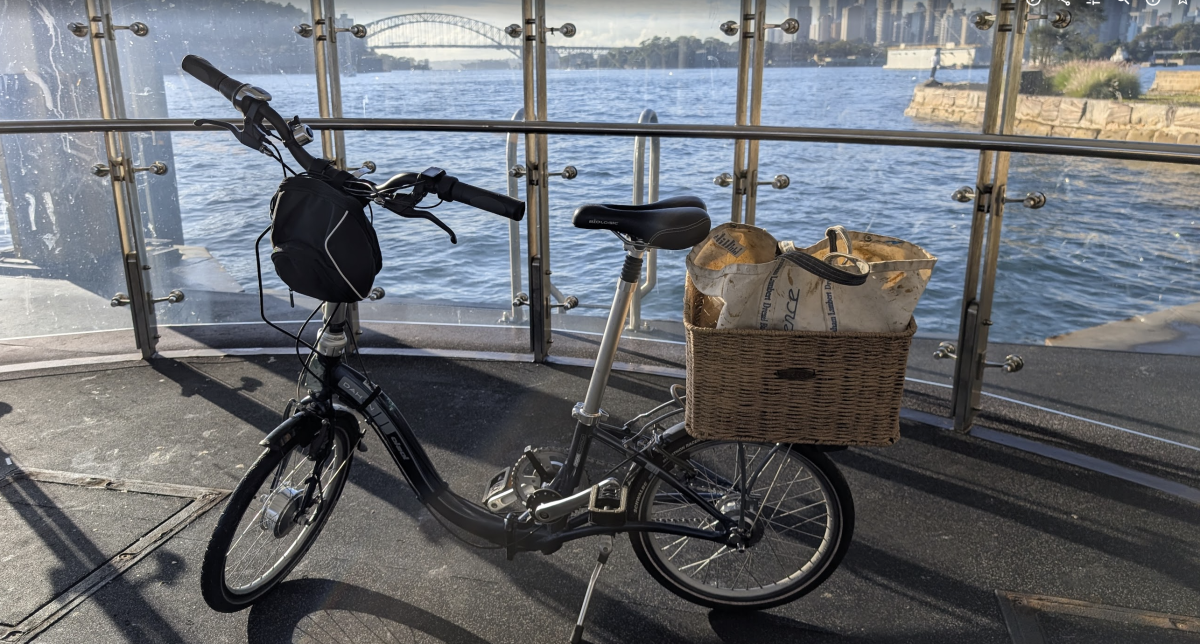
2 pointsThe kit is this from TopBikeKit https://www.topbikekit.com/16kg-tbk74ad-36v250w-48v250w-front-motor-with-20inch-406-wheel-rim-for-bromptoncranstondohon-bike-p-1320.html?zenid=lenkm5kptcedokqotuugtavks5 I went with the standard components: the motor is, I think an AKM 74, 250w, with LCD4 display, kt controller, and yes had brake handle and cut-offs and throttle, the lightest battery which is 36v10ah, and no torque arm. I did install the cut-offs and throttle. As mentioned elsewhere in this thread, the torque sensor had just failed on my bafang mid-drive bike. This meant that sometimes the motor did not stop when i stopped pedalling, which was a bit scary when approaching an intersection. So, i decided to take the low-risk option and install the cut-offs even though they arent essential. I put the throttle on just to see if it added much usability. Ideally, i'd like to have the throttle set to cut out at say 6kph, but there doesnt seem to be an option to have different top speeds between the throttle and PAS. So the top limit across both is the legal 25kp. I may remove the throttle (easy to do, just unplug) as occasionally I bump it when moving the bike out of my garage etc, causing unexpected start. As with a lot of projects i probably spent 6 months deciding, 6 weeks for delivery and 3 hours to actually assemble the thing. And a lot of time measuring the size of drop-outs etc. Also, although the Dahon folds, I rarely do this, it was just the first 20" bike I saw, in good condition, and with a nexus 8 IGH which I like. Ordering was straightforward, with pretty good communication with the site. They seem experienced with the quirks of builders. Note prices are in USD. Shipping to Oz was a bit pricey as to keep things simple I ordered the battery from them as well. Everything came in one box, well packed: There was a slight glitch with the shipping, the kit seemed to arrive in-country quite quickly , then sat at a local warehouse for over 2 weeks. When I followed up TBK said the delay was due to 'random custom inspection' - which seemed odd - and it was despatched to me the next day. despite requiring a signature the box was just left at the front door, which was a bit of a worry as we have had a lot of delivery theft locally. Assembly was surprisingly easy. I'd read it only took an hour or so, and the instructional video is just 10 minutes long ( https://www.youtube.com/watch?v=Rb0OSOdkqM0 ) but it was very easy. The trickiest part was actually the 'non-electric' elements, as I've done very little work on bikes since my teens. So, removing/transferring my old tyre, taking off handlebar grips, removing existing brake levers, installing the new levers and fitting the cable ends into the levers, then trying to re-align the brake pads, was the trickiest and most time consuming part, and I will take the bike to a local mechanic for a quick QA and check i puy everyhing back in the right way. I also stared at the PAS sensor etc working out which side to put it on, would i need to trim it to fit (see the video for this) but in the end the two sides of the PAS just pushed together quite neatly, then fitting the metal ring to hold the two parts was pretty easy. I would be surprised, however, if the PAS magnet ring gets a bit loose over time, as it is only really held on by friction, so some expoxy may be need. The battery/controller bag is also a bit fiddly to squeeze everything in, and cable management is still a challenge. But again, once motor and brake levers were in, the connections just took 5 minutes. As promised by TBK, the controller came configured. But the PAS is a bit jerky on/off, so I asked TBK for the manual and they sent the link http://topbikekit.com/LCD4%20display.pdf and will adjust settings to make take-off a bit smoother. I also have two washers left over, as I couldnt work out where they fitted. Below is a snap of the front wheel, is anything missing? Next steps are to customise the useability of the bike, putting on a front rack/box/basket to get more weight over the front wheel. there is a little bit of wheel spin currently if i set the PAS above 2 or use the throttle too heavily. Also move the battery back down a bit, possible sitting in or on the front basket installing a twin-leg stand putting on a small spring on the front wheel to stop it flopping so much more comfortable handlebars and saddle, as I ride it very upright. Note I have already put on a handlebar extender to lessen the crouch Compared to my heavier mid-drive, this feels much quicker, even without power, maybe less rolling resistance due to the narrower tyres. Its hard to judge battery distance, but it will be relatively less, which is fine as I use it for short trips to the shop, and Im happy to charge it a couple of times a week. Pushing up a hill on PAS 5 throttle really hits the battery. Below is a photo, while waiting for a ferry, and the smaller wheels/wheelbase make it much easier getting on and off. Happy to answer any other questions, and thanks again to those who helped with advice.


 2 points
 -
I would also suggest that the high almost identical price for electricity both in the UK and here in Germany is also in part down to the quasi competition that has been foisted on us. I fail to see any value add by companies that try to sell me a "good deal" on electricity that is supplied down the same wires and from the same generating source as everyone else, if they can get a wholesale price why can't I???😡2 points
-
Seven countries now generate 100% of their electricity from renewable energyScientists say we have reached an ‘irreversible tipping point’ that will see fossil fuels phased out https://www.the-independent.com/tech/renewable-energy-solar-nepal-bhutan-iceland-b2533699.html2 points
-
My bike's been going for 12 years. It's brilliant. It will be landfill one day after the worms have eaten my flesh. If you stick with standard Chinese stuff, your ebike can last forever.2 points
-
Energy bills are set to rise - but not just due to the Iran warhttps://www.bbc.co.uk/news/articles/cg73vm8yzv2o Uploading Attachment...
 2 points
 -
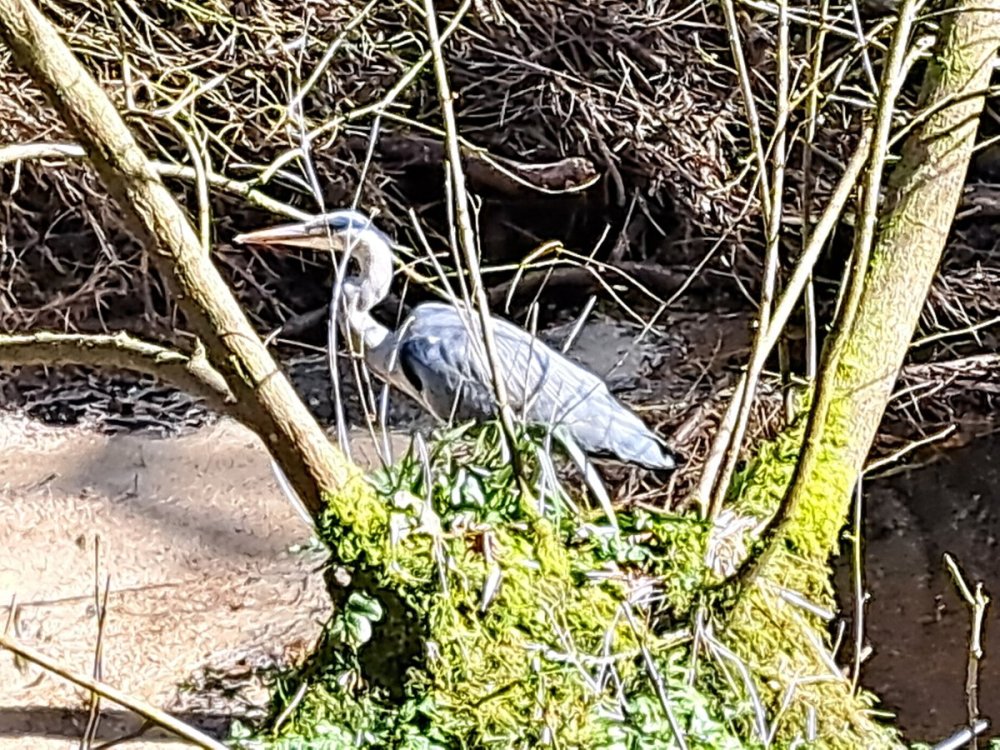
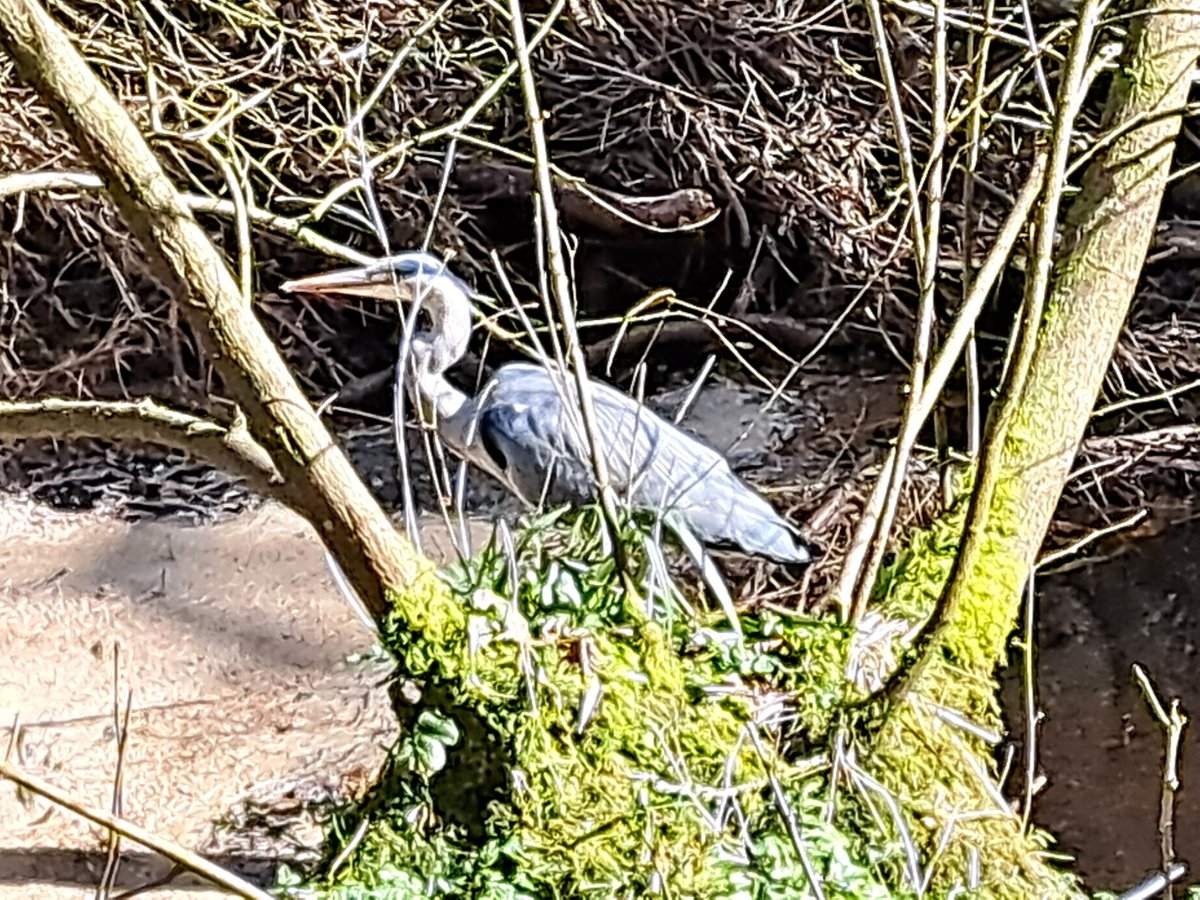
2 pointsThat guy tested at 120v and 15A. Your 48v battery charges at 2A to 54v, which will be fine. In real terms, you'll probably be able to convert about 80% of the nominal charge from your 36v batteries, so you're going to have to make sure you bring enough. Using that device, you could use a 36v battery as a range extendender by connecting it to the charge port of your 48v battery while riding. A better solution would be to use a KT dual voltage controller, then you can useboth your 36v and 48v batteries directly without a converter. I tested that it works on my folding bike.2 points2 pointsI spotted this heron there, the other day. I see this bird a lot - also at the bottom of my garden occasionally. The river runs past my boundary. There used to be a pair of them about 9 years ago, but one died and the other has carried on alone since. It is a pretty huge bird when it takes to the air. It is a bit pre-historic looking, almost resembling a pterodactyl as it flies when you disturb it by coming a bit too close.

 2 pointsSolar and batteries can power the worldhttps://nworbmot.org/blog/solar-battery-world.html2 points2 points2 pointsI've made another theme available with the darker font. You can switch between them using the 'Theme' toggle in the footer.2 pointsYou say your rear wheel is 140mm (presumably that's the OLN dimension?) - rear hub motors have a typical OLN of 135mm iirc. As a tandem rider of some 17 years, I find my Magura hydraulic rim brakes brilliant - no faffing with rubbing on discs etc. Their stopping power has been more than adequate and I'm talking about some steep descents on serious hills in France, Switzerland and Germany and fully camping kit loaded too, thus unless you particulalry want disc brakes and the faff of getting braze-on, I'd say to stick with the Magura. For interest, due to having a Rohloff in the rear I have an Aikema AKM100sx in the front wheel (it's actually a wheel from a Swytch bike conversion that someone was selling on) which I'm running at 48v and whilst I no longer tour it's power is adequate for our day rides. As for the issue of front wheel spin on gritty/loose road surfaces, I guess this is a possibilty if using max power and not riding cautiously, but is not something I'm anticipating having a problem with as I generally stick to tarmac.2 pointsIt is perfectly clear that the regulations were in a mess and so was the organisation responsible for their enforcement. This organisation was distinct from government - it was a QUANGO. QUANGOS were supposed to be made independent of the vagaries of government, they were put forward as a kind of pure, technocratic form of governance - separated from political considerations and variability as governments changed and ideology altered with that process. In fact they were and still are a disaster and are part of the reason UK government is impotent in important matters. They are bureaucratic, and devoted to process, rather than action. This last thing is now an especially British disease, as is handing political power to any independent body - something we have done here now for thirty some years. Anyway - I am still absolutely convinced having listened to politicians of diverse parties all saying the same thing - infrastructure building here is paralysed by enquiries, vast paper-work, judicial reviews, and a mass of nonsense. ALL Parties say so. If you want to build anything, you will be stopped and forced into a massive process. We NEED all kinds of infrastructure change. We do not need planners and judges and nimbies bringing everything to a halt when a high capacity transmission line is needed through Northumberland to carry the planned 40 Gigawatts of Scottish wind farm capacity to England. I think we now have 6 - 7 Gigawatts of grid capacity between Scotland and England. The estimate is that it might be done by 2034. WHY? Why not 2028? We have the self same problem in building nuclear power. Every new station is treated as a brand new project with vast struggle for permissions. You can build an identical station to already operating ones, on a site which already has nuclear power and it is treated as if neither of these things had ever been done before. 44,000 pages of paperwork were submitted in 2020 concerning the building of Sizewell C. The permissive process took TEN YEARS! It will take another twelve years to build - if it proceeds according to plan. In South Korea the whole process would take half the time.2 points2 pointsI think you are right about that grey coloured font. It is hard to see for me too.2 points2 points2 points2 pointsAdmin has obviously put a lot of time into the new forum and it is much much faster. I have no idea why it isn't working for MatthewSlack. It is about ten times quicker here, running a cheap chromebook on chromebrowser. Anyway - I'd like to send appreciation to Mr Scott who I believe is the admin, for the time and money input, and for taking note of user issues and requests. The niggles some people have had may be a matter of omelettes and breaking eggs for a little while. I'm not a patient person, but even I can see that we might need a little patience, to allow for things to be sorted out.2 pointsEuropean country vows to give homeowners ‘free electricity' instead of switching off wind turbineshttps://www.euronews.com/2026/03/27/european-country-vows-to-give-homeowners-free-electricity-instead-of-switching-off-wind-tu2 pointsSolar is winning the energy raceThe world’s cheapest power source is scaling at warp speed, pushing coal, gas and nuclear aside. https://www.dw.com/en/solar-is-winning-the-energy-race/a-765175562 pointsBASE experiment at CERN succeeds in transporting antimatterThe experiment successfully transported a trap filled with antiprotons across CERN’s main site, a remarkable first step towards delivering antimatter to other European laboratories https://home.cern/news/press-release/experiments/base-experiment-cern-succeeds-transporting-antimatter Antimatter has been transported for the first time ever — in the back of CERN’s truckPhysicists have succeeded for the first time in transporting the most expensive and most volatile substance on Earth: antimatter. https://www.nature.com/articles/d41586-026-00950-w2 points‘Suddenly energy independence feels practical’: Europeans are building mini solar farms at homehttps://www.euronews.com/2026/03/26/suddenly-energy-independence-feels-practical-europeans-are-building-mini-solar-farms-at-ho2 pointsSouth Korea Mandates Solar Panels For Public Parking Lotshttps://www.reutersconnect.com/item/south-korea-mandates-solar-panels-for-public-parking-lots/dGFnOnJldXRlcnMuY29tLDIwMjY6bmV3c21sX01UMU5VUlBITzAwMFZKRjFZQQ2 pointsIf you want to get to that level of discernment, the only way forward is to ride bikes with the different setup on an identical course, and then ride them many times, keeping note of the ranges achieved. The confounding variables would be, temperature, wind speeds, terrain, and road quality. You probably ought also to use the same tyres and at the same pressures. If you REALLY wanted to do this, I would say you should ride the bikes around a velodrome of some sort, to get rid of terrain differences, wind, road surface, and temperature variations Better still, just forget about it and ride with a nice big battery, and carry a couple of pies to make sure that if the battery lets you down, you have enough energy to get home. It used to be so simple when I was young, and just rode my bike, and carried a couple of Mars Bars in case I got worn out. I remember taking my eldest son on a long ride when he was eight. He is 46 now and a lot heavier than back then. We rode from Newcastle to Richmond and then cut off to go to a youth hostel at a place called Ellingstring. Coming up a hill to Richmond, he started crying and saying he had no more energy, so I just chucked him a packet of chocolate digestives. He sat on the verge, bubbling and ate two thirds of the packet, and then as if by magic, he got up and started off again and rode the rest of the way without complaint. We rode 65 miles and he broke down at a bit over 50 miles. Surprisingly - he still speaks to me. Social services were not involved.2 pointsSomebody hates you if they told you that. Failing to charge an ebike battery to 100% is the quickest way to ruin it. The myth originates from some info published on The Battery University website, where they said that lithium cells last longer if they're only charged to 80%, which is true for individual cells, but ebikes have a battery of multiple cells tha have to be kept in balance.The balancing only happens at the top of the charge, so will never happen if you only charge to 80%. Then comes the next myth that you can occasionally charge to 100% to do the balancing, which is also false. The balancing system works on the "little and often" principle, so an occasional full charge won't do much. When considering the range of an ebike, you can forget anything that the manufacturers or testers say. Whatever range you get will be personal to you, and it depends on your weight, the type and amount of hills you ride up, how much effort you put into pedalling, and the capacity of the battery. In other words, the only thing you need to consider when comparing different bikes of roughly the same type is the battery capacity. The more watt-hours, the further you go. As a rough guide, an average mainly unfit middle-aged guy weighing around 90kg, riding in countryside with rolling hills, would use about 12 wh per mile. By way of example, I was using my bike mainly for fitness, so I turned the power down and pedalled hard to get 129 miles from my 750wh battery during my fairly hilly rides. The next week, I went to visit a friend 13 miles away and emptied the battery before I got home (just) because I turned the power up and didn't pedal so hard.I weigh 90kg. Obviously, bikes with fat tyres, incorrectly positioned seats and single-speed gears will get you less range than a lightweight road bike type ebike with drop bars and thin 25mm tyres. Another thing: I've seen reviews, even on this forum, where some guy has got some lightweight low power thing and says, "it flies up hills". Yes it does when you only weigh 50kg, but anyone else weighing 100kg would end up rolling backwards down the hill.2 pointsSomeone fairly fit or one who is a regular cyclist should be able to equate to 7 -10 watt hours per mile battery usage, given benign riding conditions . A not so cycle fit rider or a heavy rider may have to equate approx.12 - 15 wpm. An a totally unfit person 20wh pm plus. Power mode selected to ride in, tyres, terrain and winds all will pay a part in coming to range figures as well as the previous mentioned cycle fitness.2 points2 pointsI completely agree with both Matthew's comments. The "What's New" view was my default. Unread items is not the same. Also the amount of screen space used by each post means only 1 or 2 is visible at a time.2 points2 pointsOn the old forum, we could share links to individual posts within a thread, rather than link the start of a thread only. I had bookmarked a lot of informative posts on the old forum. Might not be able to find them now. Saved us having to count posts, to point out which specific post we were referring to. The most frequent use were things like "Your question was answered in post #n", "I refer the honourable gentleman to the comments I made eariler in post #n", What's up with your eyeballs, didn't you see post #n?", ""Why ask a forum when you can't be bothered to read useful posts like post #n?", "Follow the instructions in post #n or your bike will explode", etc.2 pointsAnd you go much too far in diminishing China's efforts and achievements in renewables. It doesn't matter how much of their coal they are burning while that is the only option, they at least are going in the right direction in so many ways, towards probable eventual success. Meanwhile Trump and his countless millions of unintentional allies like yourself are sabotaging their efforts by criticism and sabotage. This is a repeat of history. We all know the real problem, 8 billion plus people, China alone threatening to reach 2 billion at one time. But which country had the foresight and courage to not just admit the problem but actually do something about it? China of course with their one child policy. Throughout its application they faced huge criticism on grounds of cruelty, human rights, religious objection etc. But they stuck to what they knew was necessary with eventual such great success that their population has frozen at around 1.4 billion and they've lost their place as the most populous nation to India. I admire and praise their determination and tenacity, for if any one nation can eventually succeed in extending mankind's span of life on earth through progress, that nation is most likely to be China with their positivity. .2 points1 pointhttps://idlewords.com/2026/03/artemis_ii_is_not_safe_to_fly.htm1 pointYes, you have a very good point. It is particularly an issue with small niche players with 'advanced' designs. Relatively OK with Bosch as it has such large market share, and a reasonable history of supplying spares (but often at very high price). There is an alternative, which is to go for bikes that use generic Chinese parts. Even if you can't get an exact replacement after a few years you should be able to make some slight modifications and keep it going. These bikes are mostly much cheaper to buy, and much cheaper for spares. However, you need to be competent to work on any issues yourself (with the help for forums such as this); it is quite likely your LBS won't touch such a bike.1 point1 point1 point1 pointHow Artemis II is beaming back stunning video from the moon A new laser system aboard NASA’s Orion spacecraft is sending sharper video and more data back to Earth https://www.scientificamerican.com/article/nasas-artemis-ii-laser-communications-system-is-beaming-4k-video-from-the/1 point1 pointI think it takes time to polish a transfer such as this and it would be helpful to mention issues to the Admin and see how those issues are dealt with. It is my impression that Admin is pretty responsive to requests.1 pointI would look at how Trump won in 2016, lost in 2020 and won in 2024. Despite all his known defects, the system that got him elected has proven that with enough invested money, it can do same with any defective politician who does not need to know what his or her future job entails. That system is at the root of the misery inflicted on so many millions of human beings on this earth. Firstly NATO. It was setup to defend Western Europe against the Soviet Union. When the Soviet Union was disbanded, NATO should have been disbanded but Western countries like Germany and UK saw NATO as beneficial to their economy rather than just a defensive alliance. That was a big mistake that was exploited by the precursor of the system that gave Trump to the USA and us. US sell their weapons to NATO countries at a big profit and implicate NATO into offensive operations at the behest of the USA. The lure if economic benefits was stronger than sense. We now pay the price, with the Ukraine war and now the Iran war. If the current war in the Middle East has a silver lining, it is to give us the opportunity for change. Carney and Denmark show the way forward. The US wants completion of the pipeline going south from Canada and new bases in Greenland. Time to say not so fast to Trump.1 pointThank you Nealh and D8veh - I have now fitted the supplied KT PAS and it works ! Also I have a spare brake cut-out 2-pin socket live . Could I plug in a front lamp with male 2-pin . Will need it to have a switch ideally?1 pointAs a rough guide, if you buy quality generic kit from the likes of Woosh (https://wooshbikes.co.uk/) expect around £500-£600. A lot depends on the battery capacity. You can get similar kit from Yose (https://www.yosepower.co.uk/collections/e-bike-conversion-kit) probably a bit cheaper. Beware a lot of their kits are nominal 350w motors, which makes them not legal as a pedalec. If you decide exactly what bits you want you can go a lot cheaper from Ali Express or similar. Alternatively, you might go for a more upmarket system like Cytronex (https://www.cytronex.com/). This will set you back around £1000, even with quite a low capacity battery. Also, any spares are likely to be expensive, with the risk of their becoming unavailable. One of the lightest systems, partly because of relatively low power and low capacity battery. You will need to decide if you want crank, rear hub or front hub assistance. Lots about that on the forum. If you go for rear hub you will lose your nice rear wheel. If you go for crank you may well lose the front clanger. Front hub is generally less liked, but can be good on a tandem. More weight on the front wheel reduces the risk of front wheel scrubbing on gravelly hills, and you get two wheel drive with no need to compromise on gears and rear wheel. Swytch is a common option, but not generally liked here. Their expertise is marketing rather than technical or support.1 point1 pointI use those little brushes too, as well as floss. This water flosser jets water where those can't reach. First few uses knocked off chunks of plaque, have photos of that somewhere - looks and feels like small chunks of brittle stone. I've very bad gums, smoking for decades (stopped a few years ago, vape instead), other bad habits, stuff gets into odd gaps, this thing has saved having to get stuck spiky food debris professionally extracted by the dentist many times. Jets it right out, saved me money. Gums look a lot healthier after using this thing regularly, don't bleed (could be too much info). Was about to buy an expensive corded, but this is corded now. Happy happy gumminess, and on the cheap. I like cheap.1 point1 point@guerney Water flosser helps disabled people by washing out food but that's where the usefulness ends. After talking to hygienist I chucked mine in the bin. Use brush sticks. I start with big and if it don't fit gap move to next gap, then when finished move to a smaller one and repeat trying in gaps. Plaqueis is sticky like jam. You cant wash it off with a water flosser.1 point1 pointIn absence of a speed control device most displays will have 6km/h walk assist mode, walk assist is just that a low power walking mode not designed to propel a rider.1 point1 pointIt's OK, we've done a few updates over the years somtimes to fanfare, sometimes not! This is still a work in progress though as with the previous site there was a lot of customisation and at the moment it's pretty much the standard install. Looking ahead we just want something that is easy to maintain and not get charged $200/hr for changes!1 point1 pointHi Peter, top right above the Wisper banner next to the 'flag' icon there is an 'unread' content button. The menu bar will soon have a 'What's New?' option as well. UPDATE: I forgot to mention that being new forum software it has to run a large number of background processes so this feature most likely won't work until tomorrow.1 point






Account
Navigation
Search
Configure browser push notifications
Chrome (Android)
- Tap the lock icon next to the address bar.
- Tap Permissions → Notifications.
- Adjust your preference.
Chrome (Desktop)
- Click the padlock icon in the address bar.
- Select Site settings.
- Find Notifications and adjust your preference.
Safari (iOS 16.4+)
- Ensure the site is installed via Add to Home Screen.
- Open Settings App → Notifications.
- Find your app name and adjust your preference.
Safari (macOS)
- Go to Safari → Preferences.
- Click the Websites tab.
- Select Notifications in the sidebar.
- Find this website and adjust your preference.
Edge (Android)
- Tap the lock icon next to the address bar.
- Tap Permissions.
- Find Notifications and adjust your preference.
Edge (Desktop)
- Click the padlock icon in the address bar.
- Click Permissions for this site.
- Find Notifications and adjust your preference.
Firefox (Android)
- Go to Settings → Site permissions.
- Tap Notifications.
- Find this site in the list and adjust your preference.
Firefox (Desktop)
- Open Firefox Settings.
- Search for Notifications.
- Find this site in the list and adjust your preference.