Leaderboard


Popular Content
Showing content with the highest reputation since 17/04/26 in all areas
-
Have We Overestimated the Probability of Alien Life in the Universe? Once I grasped the sheer number of stars and galaxies in the universe, it seemed almost inevitable that life must be common. It was easy to imagine that the “little green men” of science fiction—or perhaps something larger and more menacing—might inhabit planets orbiting countless stars. Looking up at the night sky felt like looking at a vast collection of potential civilisations we might one day communicate with. It’s an appealing idea. But is it realistic? How likely is it that alien life exists on planets orbiting the stars we can see with the naked eye? My partner, an optimistic soul, dismisses my doubts. To her, it’s simply a numbers game. The Milky Way alone contains roughly 400 billion stars, so it seems unlikely that our Sun and its planets are anything special. I understand that argument. Statistically, it feels improbable that we are unique. But that intuition may be misleading. If very specific conditions are required for life to begin, for it to persist, and for it to evolve into complex, intelligent forms capable of building technological civilisations, then rarity—not abundance—may be the more realistic conclusion. It is extraordinarily difficult for simple life to evolve into complex organisms such as animals. It is even rarer for those organisms to develop behaviours that extend beyond survival—beyond eating and reproducing—towards intelligence, culture, and technology. And it is harder still for a species like Homo sapiens to progress from hunter-gatherers to builders of machines capable of exploring or communicating across the stars. Our own history makes this clear: it took nearly 300,000 years for our species to reach that point. Why emphasise how difficult these steps are? Because Earth’s history demonstrates just how long and improbable they appear to be. The Earth formed around 4.5 billion years ago as a molten, hostile world, battered by collisions during the chaotic early solar system. A massive impact—likely with a Mars-sized body—created the Moon and left the young Earth a seething, molten sphere. It took millions of years to cool. Nearly a billion years later, life emerged. Not animals, but simple single-celled organisms—algae, slime-like colonies, and microscopic cells drifting in the oceans. For roughly two to two-and-a-half billion years, life on Earth remained single-celled. Then, in what appears to have been a singular event, complexity arose. One cell engulfed another and, instead of digesting it, formed a symbiotic relationship. This partnership—an evolutionary breakthrough—gave rise to more complex cells. It happened, as far as we can tell, only once. From that point, evolution continued its slow work. Yet it was not until about 500 million years ago—four billion years after Earth formed—that plants first colonised land. Animals followed tens of millions of years later. And humans? We arrived astonishingly late: roughly 4.4 billion years after the planet formed. We are newcomers on an ancient world. Even then, technological civilisation is a very recent development. The first crude steam engine appeared in 1712, improved later by James Watt. Radio communication dates back only about 130 years, to experiments by Guglielmo Marconi—a blink of an eye compared to Earth’s 4.5-billion-year history. All this suggests that the path from chemistry to intelligent, technological life is not straightforward. It is long, fragile, and contingent on many unlikely steps. Even on Earth, only one species out of millions has developed advanced technology. And Earth itself may be unusually well-suited for life. It orbits a stable, long-lived star. Of the eight planets in our solar system, only one supports life today. The others are either scorched or frozen, barren worlds. Habitability requires more than just a comfortable “Goldilocks” temperature. A planet must retain a dense atmosphere to keep water liquid—and that atmosphere must be protected. Here lies a crucial factor: a strong magnetic field. Stars emit radiation and charged particles capable of stripping away planetary atmospheres. Even our relatively calm Sun has done this to both Mercury and Mars. Mercury has no atmosphere at all, and Mars retains only a thin remnant of what was once a much thicker one. Mars likely had liquid water for up to a billion years or more. We can see evidence in its river valleys, deltas, and sedimentary rocks. But as the planet cooled, its internal dynamo shut down, its magnetic field weakened, and its atmosphere was gradually stripped away. Without sufficient pressure, liquid water could no longer exist on its surface. If this can happen in our own solar system, it raises a sobering point: many planets may begin with favourable conditions, only to lose them. Worse still, our Sun is relatively gentle. A large proportion of stars in the galaxy—particularly red dwarfs—are far more volatile, producing intense flares capable of stripping atmospheres from nearby planets with ease. Taken together, these factors suggest that while stars and planets may be abundant, the conditions required for life—and especially intelligent, technological life—are exceptionally demanding. For all the vastness of the cosmos, we may not be surrounded by thriving civilisations. Instead, life may be rare, fragile, and fleeting. On this remarkable planet, only one species has crossed the threshold into technology—and even we spent almost our entire existence using simple tools, struggling to survive. Perhaps the universe is full of worlds. But worlds like ours may be few.2 points
-
2 points
-
I remember that 'leak'. I was about six, I think, and we saw a jolly treatment of the Calder Hall Fire on the local news, but quite a while after it had happened. The system was a graphite moderated pile like pigeon holes in a wall of graphite which they pushed fuel rods in and out of to control things. That's a rough and ready description. IT made some heat, but its primary purpose was to make plutonium for bombs. The system went wrong when the moderating mechanism went wrong and at least some of the control was lost and the graphite went on fire. It had a chimney on it and large amounts of radioactivity was escaping into the environment. It was kept completely secret, until the Swedes started kicking off about the levels of radioactivity that was showering down on them, and then it all came out - news managed with a cheerful commentary about how all would be well because the farmers around and about the plant were pouring their milk churns down the drains. I can still remember that black and white fuzzy 405 line television piece, and my mother complaining about the waste of good milk. At its worst there were eleven tonnes of uranium on fire and venting dangerous stuff to the environment. You can read about it here - it is worth a look. https://en.wikipedia.org/wiki/Windscale_fire Many years later after the Chernobyl accident, in an amazing coincidence a survey of nuclear contamination in the Lake District discovered that there was high radioactivity on the Lake District fells and there were controls on the sale of sheep meat introduced. It was a pretty localised contamination which our lying government said was due to a cloud of nuclear fallout from Chernobyl having been washed down to the fells by a rain storm. I just don't believe that at all. It is my view that the area contaminated was down wind of Calder Hall - now called Windscale and that the contamination had been there since 1957 - hidden from the British Public, as had been the initial dangerous incident, until it was publicised by the Swedes. In fact - having just read the linked material below, I can say that about 50% of the radioactivity in the lamb was from the Windscale Fire in 1957. Nobody told us. That is how government in the UK works. During the same period, governments produced plans for controlling the population in the event of nuclear war. The advice to the public was to take off doors and put them at a 45% angle up against a wall and to sit under it with a label attached to you saying who you were. The REALLY strong message was that you should "STAY AT HOME". All about control - nothing about safety. https://share.google/aimode/zWzTLIxHZdaPkXlX5 Protect and survive film - You will laugh at this.2 points
-
I just ask google, which SMRs are currently operable? Then follow up with Google AI. SMRs for AI datacentres are plausible solution. I follow the progress of Chinese SMRs in the last couple of years. Also, China operates the only TSMR at the moment. I am also following progress of the Danish Copenhagen Atomics. I like their ideas. The currently operable small modular reactors (SMRs) in China include: Linglong One: The world's first commercial small modular reactor on land, officially operational in Hainan Province. It has a power generation capacity of 125 megawatts and is expected to be completed by 2026. ACP100: A small modular reactor demonstration project located in Hainan, which is nearing completion and will also be operational. Current Status and Near-Term Deployment (2026–2035) Technical Maturity: As of 2026, SMRs are transitioning from advanced R&D and prototype testing into first-of-a-kind commercial deployment. Many designs leverage light-water technology, while others explore advanced concepts such as molten salt, high-temperature gas-cooled, or fast-spectrum designs. Construction and Scale: Initial SMRs are expected to be constructed in this phase with smaller footprints (1–300 MWe), modular factory fabrication to reduce on-site risks, and to demonstrate operational feasibility. Regulatory Landscape: Governments are modernising licensing frameworks, e.g., streamlined NRC paths, digital approval dashboards from the NEA, and early alignment with international standards. Risk mitigation includes insurance and power purchase agreements, partially offsetting financial uncertainties. Market Adoption: Early customers include industrial energy-intensive sectors (desalination, chemical production, data centers) and countries aiming to meet net-zero targets. International competitiveness is influenced by whether state-backed enterprises like China and Russia dominate initial global markets. 2. Acceleration Phase (2035–2045)Economies of Scale: By mid-century, factory-based mass production of SMRs should reduce capital costs, enabling price and performance parity (P3) with renewables and conventional energy. Technology Expansion: High-temperature SMRs for industrial heat and hydrogen production will expand. Microreactor fleets (≤20 MW) could enable distributed energy in remote regions. Advanced fuels (e.g., thorium or HALEU) and higher burnup reduce refueling frequency, further lowering operational costs. Integration with Energy Systems: SMRs may operate in hybrid systems, paired with renewables, energy storage, and carbon capture solutions for continuous grid support and load-following, contributing to decarbonization pathways. Global Adoption: Alignment of licensing regimes across allies and deployment hubs in Europe, North America, and Asia facilitates exportable SMR markets. 3. Maturity Phase (2045–2050)Cost Competitiveness: With multiple production lines and standardised designs, SMRs are expected to match or undercut fossil fuel costs per MWh. Deployment Scale: Estimates based on NEA and IPCC pathways suggest nuclear capacity may reach ~1,160 GW by 2050, with a significant fraction from SMRs, especially in hard-to-decarbonize sectors. Technological Convergence: Digital twin management, automated maintenance, and AI-enhanced safety monitoring become standard. Advanced SMRs may exploit co-generation, producing electricity and industrial heat or hydrogen simultaneously. Policy and Risk Management Evolution: Governments and multilateral agencies refine long-term financing strategies, such as renewable-linked incentives and multilateral risk-sharing, reducing reliance on taxpayers. Regulatory harmonisation minimizes geopolitical and licensing delays across multiple jurisdictions. 4. Key Uncertainties and Risk FactorsTechnology Risk: Operational reliability of advanced SMR designs, fuel availability (HALEU supply), and integration challenges. Market Risk: Long-term energy demand scenarios, competition with cheaper renewables, and industrial adoption rates. Political and Regulatory Risk: Policy shifts, nuclear opposition in certain regions, and international proliferation or security concerns. 5. Summary OutlookFrom 2026 to 2050, SMRs are projected to: Progress from prototype testing to initial industrial deployment (2026–2035), Enter a cost-reduction and scale-up phase with modular factory production and broader market penetration (2035–2045), Reach maturity with wide adoption, P3 feasibility, and integration into global decarbonization strategies (2045–2050). By 2050, SMRs could become a central and flexible pillar of clean energy infrastructure, complementing renewables and providing round-the-clock low-carbon electricity and heat, particularly in industrial and remote applications, effectively reshaping global nuclear energy markets.2 points
-
Reeves vows to break link between cost of gas and electricity prices in boost for UK households“When gas prices are high, we end up paying more for our electricity, even though the cost of producing it doesn’t change,” the Chancellor said https://www.independent.co.uk/news/uk/politics/reeves-gas-electricity-energy-prices-b2959359.html2 points
-
Yle UutisetSuomalainen yritys keksi vaarallisille litiumakuille vaih...Nordic Nano Group on kehittänyt ympäristöystävällistä akkuteknologiaa, joka voisi korvata vaaralliset litiumakut.92024, as good as confirming the scam. So the commercial director could not be persuaded to go along with/continue the scam. Edit - a reddit lists it and others dating back as far as 2021. They even forged one test report ! A comment also mentions cost. About €50,000 for a 1kwh battery.1 point
-
Trump has until May 1st to stop the war in Iran. On that day, Congress will have to expressly authorise him to continue. The Iran war has already cost a packet. At least 50 billion dollars for ammunitions, damaged equipment, fuels, wages. 200 billion extra funding for the military this year, 500 billion extra for 2027. There is little chance that Congress will vote for that. Apparently the UAE has asked Trump for money to bail them out, otherwise, they will ask Xi. Hopefully, Qatar, Bahrain, Oman, Kuwait will do same. One silver lining of this war if Iran manages to get some war reparations like charging toll on hormuz, the world will have to come up with a scheme to force those responsible to pay reparation to civilian victims of collateral damages. That will surely deter any future attempts to start a new war.1 point
-
Ran through with my bikes specs (step through cargo-ish style 700c wheels..) The downtube battery option was unavailable, while perhaps not suitable for all bikes in this category, certainly would and does work with mine see icon pic.. *although did require a couple of rivnuts fitting.. Otherwise Thumbs up, the concise descriptions and explanations all made good sense ..1 point
-
Its very good - I wondered if you could introduce a "no preference" option and it would list all the alternatives, eg cadence sensor, torque sensor or no preference I noticed if you choose mid drive it lists cadence sensor "Great Value" or torque sensor "Natural Feel" but the torque sensor kit chosen (TSDZ8) is actually significantly cheaper than the cadence sensor kit (BBS01B). If someone wanted the cheapest they might be inclined to choose "Great Value" cadence sensor and not see the option of the significantly cheaper TSDZ81 point
-
1 pointYou don't understand quantum physics. In the world we know, time goes only foward. Faster than light is theoretically possible but we have no idea how to do it at present. Other civilisations may have cracked it. I put a few often asked questions to chatGPT for you. https://chatgpt.com/s/t_69e8a7a2fdd48191b9fd337e9efe4d481 point15 years ago, I used to use the BMSBattery KU series all the time. Their advantage was that they'd work with any motor without needing to do settings, and the KU63, 93 & 123 have the three speed switch that can boost the top speed by adjusting the timing. The downside is no LCD to set a legal speed limit or anything else, though on some of my bikes with 26" wheels the slow 3-speed switch setting seemed to correspond with 15 mph. The PSWPower one is a standard Chinese one that you see all over Ebay and Amazon for around £35 to £40. They work fine, but you get the speed related pedal assist, which I don't like at all, except on a relatively low power application, where it's effect is less noticeable.1 pointThat new CATL Shenzing seems to do it all. 15C peak 5 min charging. Getting resistance ultra low must signifyhigh round trip efficiency on top of much increased longevity. SSB will stay niche, CATL admitting development crawl. CATL Naxtra sodium has added 6 months to its timeline.1 pointAmprius SiCore cells are said to be 450wh/kg as are some via China. Expensive.But I go back to the point that the Verge Ts Pro is regularly forever delayed so Donut expect any battery to make real production.1 pointDonut Lab Solid-State Battery — The Printer | Where a Quasi-Capacitor Becomes SSB (Ep.15)1 pointSo now for the drip drip of exactly who did what ..., who knew what ..., when, ... how illegal was it anyway, ... (and which of them knew Epstein?)1 pointLike magic. Gone. Just like that.1 point1 pointCANbus needs to see specific info via connected components otherwise know as handshaking/communications protocols. The extra three wires used are for communicating that the correct charger is being used. Without this handshaking /comms protocol these bikes are only useful as garden ornaments. Many bikes use CANbus , Bafang , Bosh and other top end expensive brands.1 point1 pointIt depends on the age, but I think you're out because the Ebco UCR30 has the Tranzx electrical system that uses CANbus comms.1 pointGlobal warming is making the strongest hurricanes stronger Recent studies link human-caused warming to more powerful, more destructive storms worldwide. https://yaleclimateconnections.org/2026/04/global-warming-is-making-the-strongest-hurricanes-stronger/1 pointIceland Just Got Its First Mosquitoes. Scientists Aren’t Ready for What Comes Next As the Arctic's climate and ecology rapidly change, two researchers are calling for a paradigm shift in insect monitoring. https://gizmodo.com/iceland-just-got-its-first-mosquitoes-scientists-arent-ready-for-what-comes-next-20007474011 pointI checked the weather data for that day, 10th October 1957 and the winds were westerly - blowing iodine 131, caesium 137, plutonium 239 and 240, Polonium 210, and strontium 90 all over me as a six year old playing out with my mates about 82 mils down wind in Newcastle upon Tyne. As it happens, it didn't do me any harm and I find it useful that I glow in the dark and can find my way on moonless nights by the soft glow of my nuclear charge. I was certainly contaminated and so was everybody else who lived down wind of it. Eighty Two miles downwind -
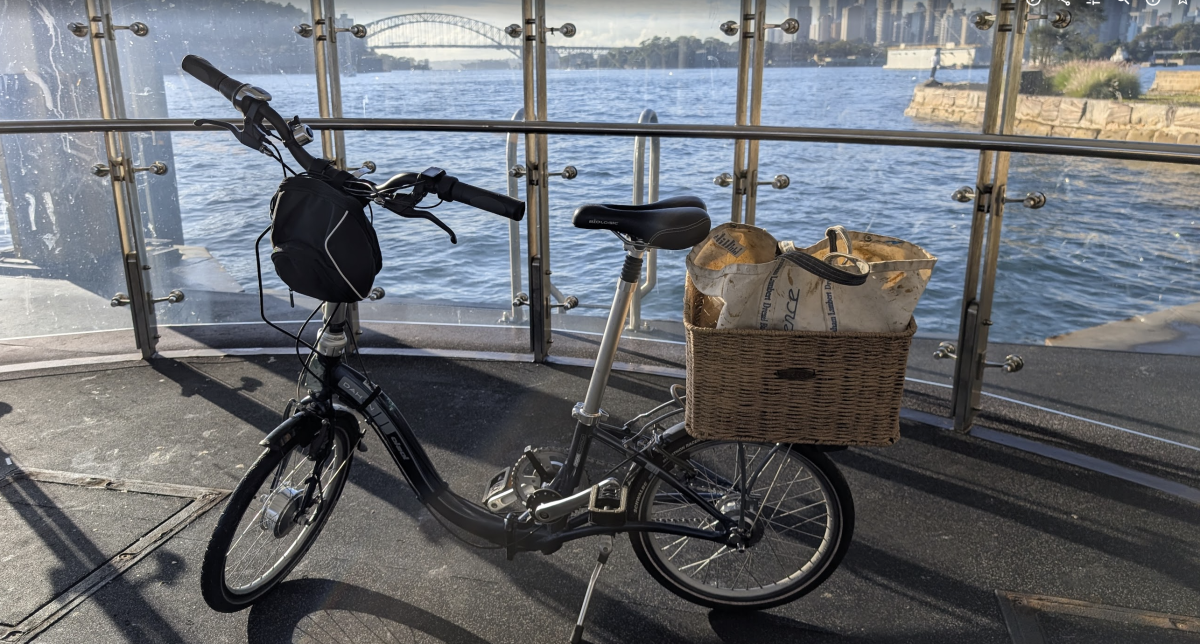
 1 point1 pointCame to use my cordless hedge trimmer yesterday. Battery totally shot. It is a GTech model and about 4years old so well out of warranty. Rang customer service and they could not have been more helpful. Straight away said they would send me a new battery FOC and that is now with the courier. Service like that needs to be commended1 point1 pointJust received the battery. So after initial phone call at 4.30pm yesterday. Excellent1 point1 pointBYD is now upgrading some of its top selling EVs with 5-min flash charginghttps://electrek.co/2026/04/15/byd-upgrading-top-selling-evs-with-5-min-flash-charging/1 point1 point1 pointBy 2050, Chinese SMRs will be everywhere the way their EVs are now. They currently finish a new nuclear power station every 3 weeks.1 pointYou are obsessed with Miliband, aren't you? He's a has been. Forget him.1 pointTony1951 does not pay enough attention to details. Prices are not uniform across all states. Discussions with Tony1951 is tiring, you have to repeat yourself several times to get his attention to details. One good thing though, he's pretty OK with debates.1 point1 pointCovid jabs huge success, but work needed on trust in vaccines - key findings from Covid reporthttps://www.bbc.co.uk/news/articles/ce3dp52l70zo1 point1 pointThe kit is this from TopBikeKit https://www.topbikekit.com/16kg-tbk74ad-36v250w-48v250w-front-motor-with-20inch-406-wheel-rim-for-bromptoncranstondohon-bike-p-1320.html?zenid=lenkm5kptcedokqotuugtavks5 I went with the standard components: the motor is, I think an AKM 74, 250w, with LCD4 display, kt controller, and yes had brake handle and cut-offs and throttle, the lightest battery which is 36v10ah, and no torque arm. I did install the cut-offs and throttle. As mentioned elsewhere in this thread, the torque sensor had just failed on my bafang mid-drive bike. This meant that sometimes the motor did not stop when i stopped pedalling, which was a bit scary when approaching an intersection. So, i decided to take the low-risk option and install the cut-offs even though they arent essential. I put the throttle on just to see if it added much usability. Ideally, i'd like to have the throttle set to cut out at say 6kph, but there doesnt seem to be an option to have different top speeds between the throttle and PAS. So the top limit across both is the legal 25kp. I may remove the throttle (easy to do, just unplug) as occasionally I bump it when moving the bike out of my garage etc, causing unexpected start. As with a lot of projects i probably spent 6 months deciding, 6 weeks for delivery and 3 hours to actually assemble the thing. And a lot of time measuring the size of drop-outs etc. Also, although the Dahon folds, I rarely do this, it was just the first 20" bike I saw, in good condition, and with a nexus 8 IGH which I like. Ordering was straightforward, with pretty good communication with the site. They seem experienced with the quirks of builders. Note prices are in USD. Shipping to Oz was a bit pricey as to keep things simple I ordered the battery from them as well. Everything came in one box, well packed: There was a slight glitch with the shipping, the kit seemed to arrive in-country quite quickly , then sat at a local warehouse for over 2 weeks. When I followed up TBK said the delay was due to 'random custom inspection' - which seemed odd - and it was despatched to me the next day. despite requiring a signature the box was just left at the front door, which was a bit of a worry as we have had a lot of delivery theft locally. Assembly was surprisingly easy. I'd read it only took an hour or so, and the instructional video is just 10 minutes long ( https://www.youtube.com/watch?v=Rb0OSOdkqM0 ) but it was very easy. The trickiest part was actually the 'non-electric' elements, as I've done very little work on bikes since my teens. So, removing/transferring my old tyre, taking off handlebar grips, removing existing brake levers, installing the new levers and fitting the cable ends into the levers, then trying to re-align the brake pads, was the trickiest and most time consuming part, and I will take the bike to a local mechanic for a quick QA and check i puy everyhing back in the right way. I also stared at the PAS sensor etc working out which side to put it on, would i need to trim it to fit (see the video for this) but in the end the two sides of the PAS just pushed together quite neatly, then fitting the metal ring to hold the two parts was pretty easy. I would be surprised, however, if the PAS magnet ring gets a bit loose over time, as it is only really held on by friction, so some expoxy may be need. The battery/controller bag is also a bit fiddly to squeeze everything in, and cable management is still a challenge. But again, once motor and brake levers were in, the connections just took 5 minutes. As promised by TBK, the controller came configured. But the PAS is a bit jerky on/off, so I asked TBK for the manual and they sent the link http://topbikekit.com/LCD4%20display.pdf and will adjust settings to make take-off a bit smoother. I also have two washers left over, as I couldnt work out where they fitted. Below is a snap of the front wheel, is anything missing? Next steps are to customise the useability of the bike, putting on a front rack/box/basket to get more weight over the front wheel. there is a little bit of wheel spin currently if i set the PAS above 2 or use the throttle too heavily. Also move the battery back down a bit, possible sitting in or on the front basket installing a twin-leg stand putting on a small spring on the front wheel to stop it flopping so much more comfortable handlebars and saddle, as I ride it very upright. Note I have already put on a handlebar extender to lessen the crouch Compared to my heavier mid-drive, this feels much quicker, even without power, maybe less rolling resistance due to the narrower tyres. Its hard to judge battery distance, but it will be relatively less, which is fine as I use it for short trips to the shop, and Im happy to charge it a couple of times a week. Pushing up a hill on PAS 5 throttle really hits the battery. Below is a photo, while waiting for a ferry, and the smaller wheels/wheelbase make it much easier getting on and off. Happy to answer any other questions, and thanks again to those who helped with advice.


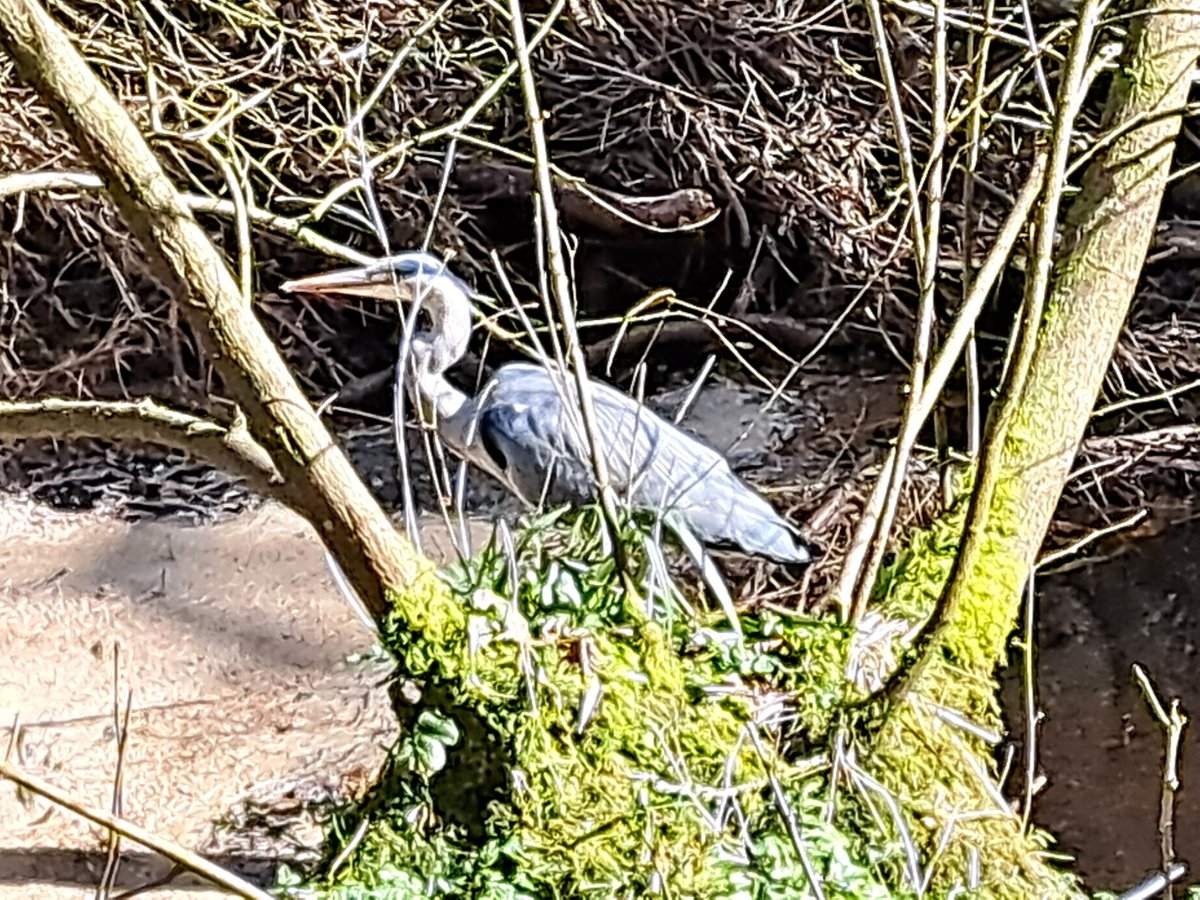
 1 point1 pointIt's legal because the power output by the controller has nothing to do with the 'Maximum rated power' of the motor. The manufacturer tests and rates the motor and labels it as 250w to be legal, But a motor does not consume a fixed wattage as, say, a light bulb does. It will utilise whatever current is fed into it and will destroy itself if that current is too high. My own hub powered bike displays 750w in maximum power up hill. Still legal if all the labeling is correct. By the way, 1012 miles for a motor is rubbish. My first hub did around 15,000 in 8 years and was only changed because it wasn't strictly legal.1 point1 pointI spotted this heron there, the other day. I see this bird a lot - also at the bottom of my garden occasionally. The river runs past my boundary. There used to be a pair of them about 9 years ago, but one died and the other has carried on alone since. It is a pretty huge bird when it takes to the air. It is a bit pre-historic looking, almost resembling a pterodactyl as it flies when you disturb it by coming a bit too close.
 1 pointAs a rough guide, if you buy quality generic kit from the likes of Woosh (https://wooshbikes.co.uk/) expect around £500-£600. A lot depends on the battery capacity. You can get similar kit from Yose (https://www.yosepower.co.uk/collections/e-bike-conversion-kit) probably a bit cheaper. Beware a lot of their kits are nominal 350w motors, which makes them not legal as a pedalec. If you decide exactly what bits you want you can go a lot cheaper from Ali Express or similar. Alternatively, you might go for a more upmarket system like Cytronex (https://www.cytronex.com/). This will set you back around £1000, even with quite a low capacity battery. Also, any spares are likely to be expensive, with the risk of their becoming unavailable. One of the lightest systems, partly because of relatively low power and low capacity battery. You will need to decide if you want crank, rear hub or front hub assistance. Lots about that on the forum. If you go for rear hub you will lose your nice rear wheel. If you go for crank you may well lose the front clanger. Front hub is generally less liked, but can be good on a tandem. More weight on the front wheel reduces the risk of front wheel scrubbing on gravelly hills, and you get two wheel drive with no need to compromise on gears and rear wheel. Swytch is a common option, but not generally liked here. Their expertise is marketing rather than technical or support.1 pointIf you want to get to that level of discernment, the only way forward is to ride bikes with the different setup on an identical course, and then ride them many times, keeping note of the ranges achieved. The confounding variables would be, temperature, wind speeds, terrain, and road quality. You probably ought also to use the same tyres and at the same pressures. If you REALLY wanted to do this, I would say you should ride the bikes around a velodrome of some sort, to get rid of terrain differences, wind, road surface, and temperature variations Better still, just forget about it and ride with a nice big battery, and carry a couple of pies to make sure that if the battery lets you down, you have enough energy to get home. It used to be so simple when I was young, and just rode my bike, and carried a couple of Mars Bars in case I got worn out. I remember taking my eldest son on a long ride when he was eight. He is 46 now and a lot heavier than back then. We rode from Newcastle to Richmond and then cut off to go to a youth hostel at a place called Ellingstring. Coming up a hill to Richmond, he started crying and saying he had no more energy, so I just chucked him a packet of chocolate digestives. He sat on the verge, bubbling and ate two thirds of the packet, and then as if by magic, he got up and started off again and rode the rest of the way without complaint. We rode 65 miles and he broke down at a bit over 50 miles. Surprisingly - he still speaks to me. Social services were not involved.1 pointThe bosch range assistant (https://www.bosch-ebike.com/en/service/range-assistant) is a useful tool. Designed for Bosch bikes, but with a little interpretation gives a good idea for other ebikes. Even if not that precise for a given bike, it is particularly helpful at indicating the differences in range for different riding condition, styles, and assist levels. For example, set it to best riding conditions, low assist, slow, light rider etc and see the result. This is the 'up to' figure quoted in some misleading ads. Then make some relatively minor changes: more assist, some wind, some hills, some bad road, slightly faster riding etc, and see how the estimated range changes. Without going to extremes it is easy to find very reasonable settings that give 1/3 range of the ideal settings1 point